Food Finder - Mobile App Website Landing: A Design Deep Dive
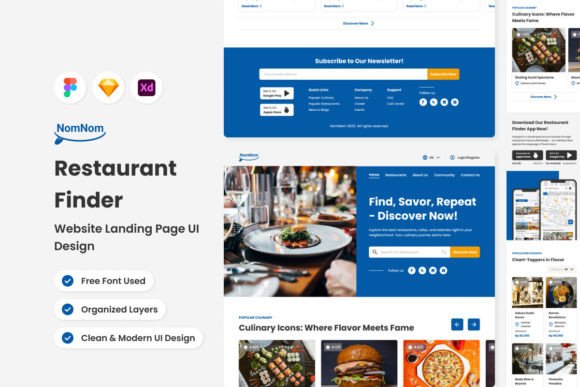
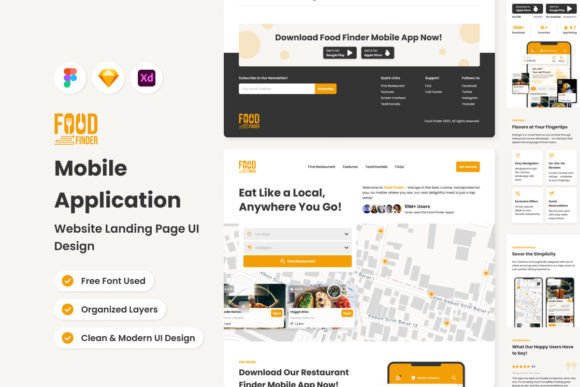
Imagine you're starving, scrolling through your phone, and every food app feels the same. Bland interfaces, confusing layouts, and stock photos that look nothing like the meal you'll actually get. This is the friction point the Food Finder - Mobile App Website Landing page is built to solve. It's not just a template; it's a carefully crafted digital storefront designed to convert casual browsers into hungry, engaged users. The design philosophy here is about immediate clarity and sensory appeal. From the moment the page loads, the dynamic hero section does the heavy lifting, presenting a mosaic of vibrant culinary images that are more than decoration—they're a direct emotional trigger for appetite and curiosity.
Visual Personality and Intuitive Architecture
The visual style of the Food Finder - Mobile App Website Landing leans into a clean, modern aesthetic that prioritizes content over clutter. The layout uses a balanced grid system that feels both structured and organic, guiding the eye naturally from the compelling hero imagery down to the feature highlights and call-to-action. The color palette is likely warm and inviting, complementing food photography without competing with it. What makes this design particularly effective is its user-friendly search functionality. It's positioned prominently, acknowledging that a user's primary goal isn't to admire the design—it's to find food, fast. This is a practical example of how good design serves function. The overall appeal is one of confident professionalism; it signals that the app behind it is equally reliable and polished.
For designers and entrepreneurs, this landing page is a masterclass in web design that respects user intent. The layers are meticulously organized, which is a godsend for anyone needing to customize it in Figma, Sketch, or Adobe XD. You can adjust the global text and color styles in minutes, not hours, allowing you to align it perfectly with an existing brand identity. The use of open-source fonts and free vector icons isn't just a cost-saving measure; it's a statement about accessibility and modern workflow. It means you're not locked into expensive licensing for your design assets, giving you more flexibility in your project's budget.
Strategic Applications Beyond the App Launch
While built for a mobile app, the utility of the Food Finder - Mobile App Website Landing extends far beyond that single purpose. Its core strength is in presenting a curated experience. This makes it an excellent starting point for:
- Restaurant and Café Websites: The layout is perfect for showcasing menu specials, chef's picks, and the ambiance of the establishment.
- Food Bloggers and Publishers: The visual hierarchy can beautifully frame recipe collections, cooking tutorials, or a curated list of kitchen tools.
- Meal Kit Services or Grocery Delivery Startups: The clear value proposition and search-centric design can be adapted to highlight ingredients, subscription plans, or delivery areas.
The design's adaptability is its superpower. By swapping out the hero images and tweaking the copy, you can pivot the entire personality of the page. This is where understanding font pairing becomes crucial. The template likely uses a combination of a clean sans serif font for body text and a more distinctive display font for headings. When you customize it, consider how your chosen typeface influences the brand perception. A rounded, friendly sans serif might suit a family-friendly meal service, while a sharp, geometric sans serif could project a more tech-forward, efficient vibe for a logistics app. The included global styles make this experimentation non-destructive and efficient.
Practical Guidance for Implementation
Adopting a template like this is a smart move, but it requires a strategic eye. Here’s how to get the most out of it:
- Evaluate Fit, Not Just Aesthetics: Before you dive in, map the template's sections to your core message. Does the feature grid align with your app's unique selling points? Is the call-to-action placement logical for your user's journey? A beautiful design that doesn't support your content strategy is a missed opportunity.
- Test Font Pairings Ruthlessly: The provided premium font choices are a great starting point. However, always test your own brand fonts within the layout. Check readability at different screen sizes, especially on mobile. A script font or handwritten font might look charming in a hero headline but could become illegible in a button. Ensure your primary body text is a highly legible sans serif or serif font for comfortable reading.
- Leverage the Organized Layers: Don't just change the colors and call it a day. Dive into the component structure. Understanding how the buttons, cards, and navigation are built will help you make smarter, more consistent edits. This organized foundation is what makes the design "easy to adjust" in practice, not just in theory.
- Consider the Commercial Context: The template itself is a design asset, but the fonts and icons included have their own licenses. Double-check that the open-source licenses for the fonts (like the SIL Open Font License) permit your intended use, especially for commercial projects. This due diligence prevents legal headaches down the line and is a mark of a true professional.
Ultimately, the Food Finder - Mobile App Website Landing is more than a pretty mockup. It's a functional toolkit built on sound modern typography and UX principles. It acknowledges that in the crowded digital space, first impressions are formed in milliseconds. By providing a visually cohesive, intuitive, and easily customizable foundation, it empowers creators—from solo developers to marketing teams—to build that critical first impression with confidence. It’s a practical bridge between a great idea and a compelling, market-ready presentation.